
Jeepnits · coming to iPhone, iPad and Android
A Tongits
road trip.
- The cards
- are Tongits.
- The jeep
- is the run.
- The terminal
- is the wall.
- The operator
- is the clock.
A solo roguelike built on Tongits and shaped like a jeepney route. You drive a contract for the operator, carry passengers, pay the boundary at every terminal, and try to buy the jeep out before the numbers catch you.
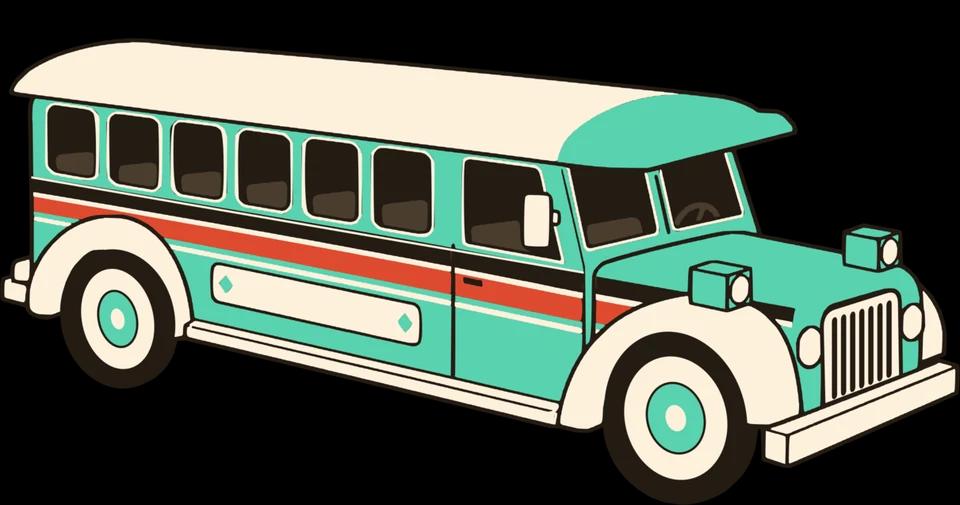
A run is a contract.
Stop
A few turns of taking and throwing on the road, then the jeep pulls in and you drop off what you have made.
Trip
Four stops, terminal to terminal. One biyahe, and the boundary is owed at the end of it.
Day
Morning, midday, rush hour. Then End of Day, the Night Shop, and tomorrow's line.
Contract
The Trial is three days. Win it and the operator offers the Week, then the Long Haul, then the Franchise.
A day takes five to eight minutes — measured, not designed. The Trial is about twenty-five minutes end to end; the Franchise, ten days long, is an evening.
“Boundary” is the scariest word in the game.
In the real trade, the boundary is what a driver owes the operator — before a single peso of what he earned is his. Make it and the trip was yours. Miss it and the shortfall rides with you to the next terminal, on top of the next boundary.
End a day still owing and the operator takes a seat in your jeep. Buy the operator out and the jeep is yours — and from then on, a day that ends owing ends the run. The boundary rises every day, so the loop is not a difficulty curve someone drew. It is a number going up while you try to keep pace with it.
Vocabulary
- Boundary
- What you owe the operator at every terminal, before anything you earn is yours.
- Biyahe
- One trip, terminal to terminal.
- Kerb
- The cards you can see and take from, instead of drawing blind.
- Tin
- Where fare goes. A run's own money; it ends with the run.
- Seats
- Room in the jeep. A card or a passenger fills one.
- Garage Funds
- What you keep between runs. Earned by playing, never sold.
A trip, start to finish.
If you have played Tongits, the cards are already familiar: sets of one rank, runs of one suit, aces low. The rest is the road.
Take and throw
Between stops, a turn is a take and a throw: one card from the kerb, which you can see, or from the blind draw, which you cannot. Then throw one of yours.
Drop Off
At a stop, sets and runs leave the jeep and their fare goes into the tin. Every three cards dropped at one stop multiply its fare — six doubles it, nine triples it.
Board
Passengers wait at every stop. Each one takes a seat, which leaves room for one fewer card, and changes the rules while aboard. They pay when they get off.
Pay the boundary
At the terminal the boundary is owed. The fare you delivered pays it and what is above it is yours. Short, and the rest carries to the next terminal.
The Night Shop
After a day, take one of three parts for free. What is left in the tin buys a bench, which adds seats — and, when you can afford it, buys the operator out.
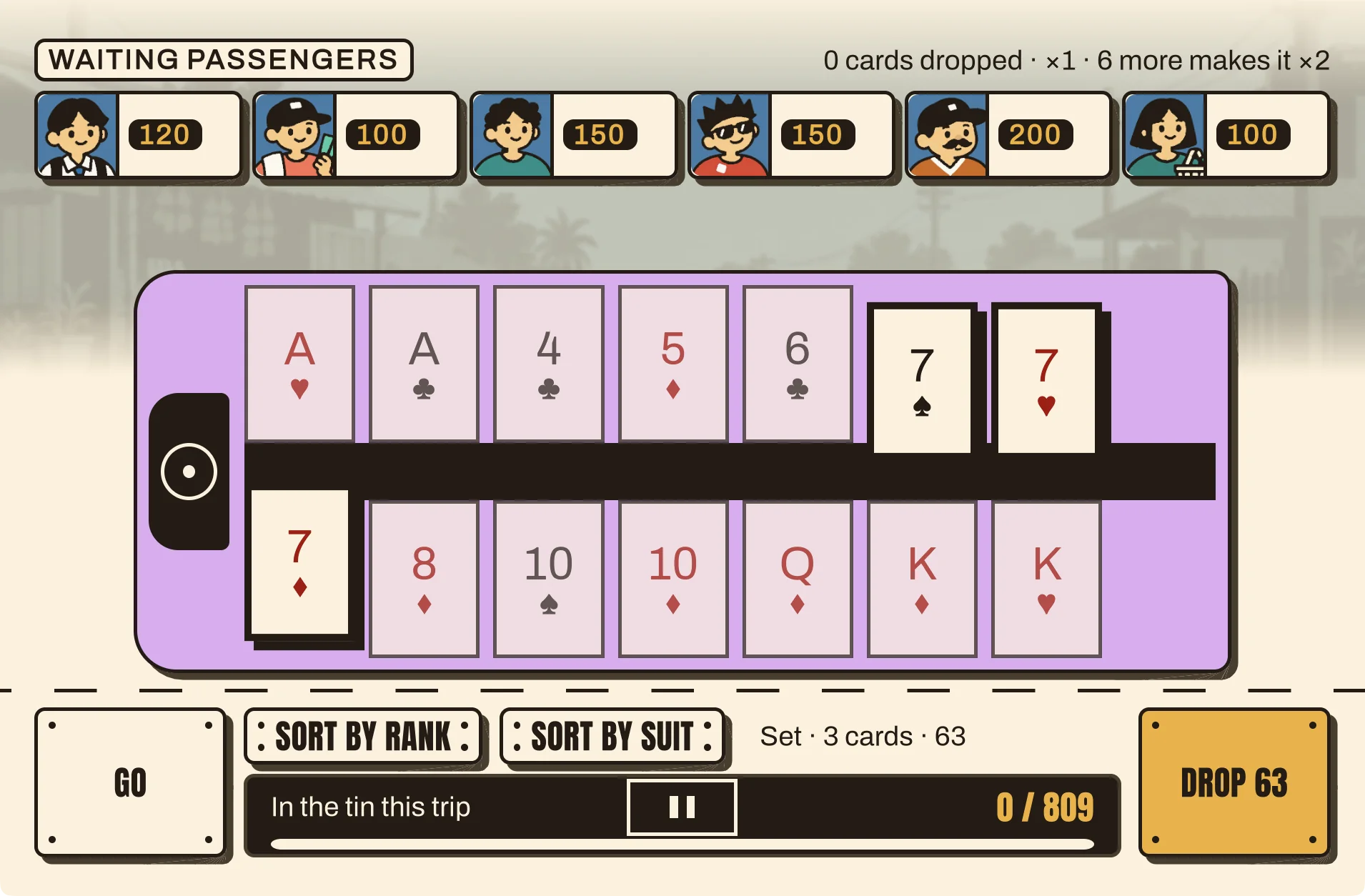
Nine passengers, nine new rules.
Everyone who rides changes how the cards pay, for as long as they are aboard. Who you let on is most of the strategy.

Lola
Every leg is one turn longer

Manong
Every Drop Off pays half again. Brings sacks: two seats

Estudyante
Cards 2 to 6 count as 10

Barkada
Sets pay one and a half times

Suki
Every Drop Off pays a little extra

Kasama
Sets pay double, runs pay half

Pasaway
Runs pay double, sets pay half

Konduktor
The kerb shows one more card

Tsismosa
The kerb shows two more cards
The jeeps you bought out stay.
A run you win parks its jeep in your garage, with its contract, its days, its parts and a name if you give it one. A run you lose leaves nothing behind — the garage is a record of the ones you paid off.
Buyouts and firsts earn Garage Funds, which buy decorations for the jeep: banderitas, antennas, bull bars, a paint job. They change how it looks and nothing else. Garage Funds are earned by playing and never sold.
The Trial is free. One purchase opens the longer contracts and the garage.
Free to start. One purchase for the rest.
The Trial — a full three-day contract with an ending — is free. One purchase opens the longer contracts, for good. No ads, no energy timer, no currency for sale, and nothing you can buy that makes a run easier.
Jeepnits is with a small group of testers on iPhone and Android now. It plays entirely offline and sends us nothing — the privacy policy says exactly what that means.